
Mathematics Curriculum Statement
Intent
At Woodside Primary Academy, we believe that every child can become a confident and successful mathematician. Our mathematics curriculum is designed to develop fluent, resilient and curious learners who can apply their knowledge to solve problems in a range of familiar and unfamiliar contexts.
In line with the National Curriculum, we aim for all pupils to:
- Become fluent in the fundamentals of mathematics.
- Reason mathematically using precise mathematical language.
- Solve problems by applying their mathematical knowledge and skills.
We want children to develop a deep understanding of mathematical concepts, make connections between different areas of mathematics and recognise the importance of mathematics in everyday life. Through rich learning experiences, children are encouraged to think critically, communicate their thinking clearly and approach challenges with confidence and perseverance.
Our ultimate goal is that pupils leave Woodside as confident mathematicians who are well prepared for the next stage of their education and able to participate successfully in an increasingly mathematical world
Implementation
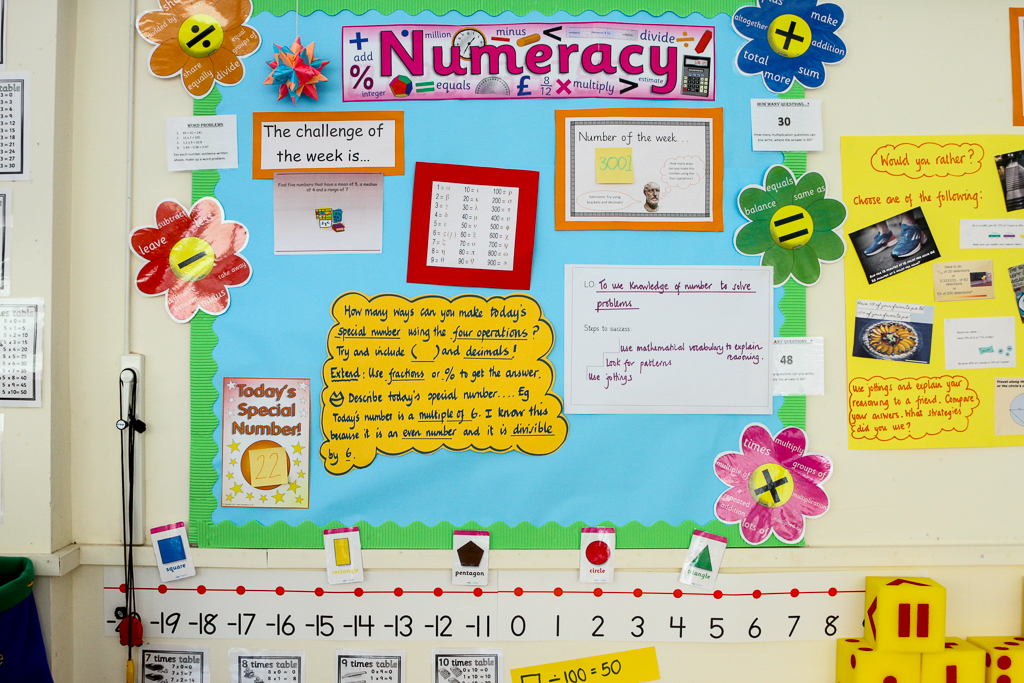
Mathematics is taught through a mastery approach using the White Rose Maths scheme as the foundation for curriculum planning. While White Rose Maths provides a strong framework, the long-term plans are adapted to meet the needs of our pupils. This ensures sufficient time for consolidation, reasoning, problem-solving and mastery, allowing children to develop a deep and secure understanding of mathematical concepts rather than focusing solely on coverage.
Learning is carefully sequenced to build on prior knowledge, support long-term retention and ensure progression across all year groups.
Key features of our approach include:
-
A strong emphasis on arithmetic, fluency, reasoning and problem solving.
- Carefully sequenced lessons that build conceptual and procedural understanding.
- The use of concrete, pictorial and abstract representations to develop secure mathematical understanding.
- Daily opportunities to revisit prior learning through retrieval practice.
- Explicit teaching and consistent use of mathematical vocabulary.
- High expectations for all pupils, with support and challenge provided through scaffolding, intervention and deepening activities.
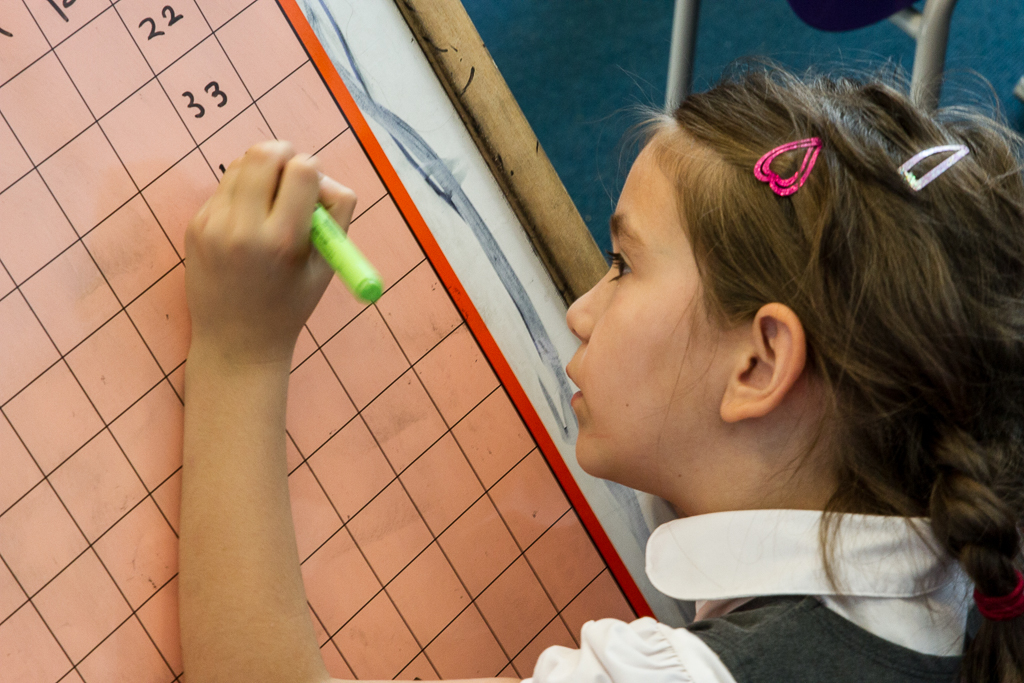
- The use of questioning, discussion and mathematical talk to develop reasoning and communication skills.
-
Regular opportunities to develop fluency in number facts, mental calculation strategies and multiplication tables through the arithmetic starters.
-
Mental maths week each half term
-
Adapting the White Rose Maths long-term plans enables teachers to deepen pupils' mathematical understanding by allocating additional time to key concepts where needed.
Children are encouraged to explain their thinking, justify their answers and make connections between mathematical concepts. Resources, representations and worked examples are used effectively to support understanding and independence.
Impact
The impact of our mathematics curriculum is reflected in pupils who:
- Demonstrate fluency in key mathematical facts and procedures.
- Apply their knowledge confidently and accurately.
- Explain and justify their thinking using appropriate mathematical vocabulary.
- Select efficient strategies to solve problems.
- Make connections across different areas of mathematics.
- Show resilience, independence and confidence when faced with challenge.
Assessment is used continuously to inform teaching and identify next steps. Teachers use daily formative assessment alongside weekly timetables tests and termly assessments to monitor progress, address misconceptions and ensure all pupils achieve their potential. Through this approach, pupils develop the knowledge, skills and confidence required for future learning and success in mathematics.
Woodside Primary Academy strives to develop mathematicians who know more, remember more and can use their mathematics confidently, accurately and purposefully throughout their lives.
Each classroom has been equipped with a rich variety of resources from which pupils can choose. These resources are motivating and allow children to explore mathematical structures in a physical way and explain their reasoning. Within this new approach, pupils are encouraged to represent mathematical structures with concrete resources first, before moving onto pictorial representation and finally abstract methods, i.e. written numbers and symbols. We use this process to ensure the fundamentals of maths are mastered and applied.